
If you don’t yet have a smart meter installed, you have probably heard about them in the news and from people you know. They make up 61% of all UK meters, and by the end of 2023, 34.8 million smart meters had been installed in British homes and businesses (UK Department for Energy Security and Net Zero)
What Are Smart Meters and How Do They Work?
Traditional meters can only track the amount of gas and electricity you use via a physical display on the meter with numbers. Smart meters, on the other hand, are the new generation of energy meters.
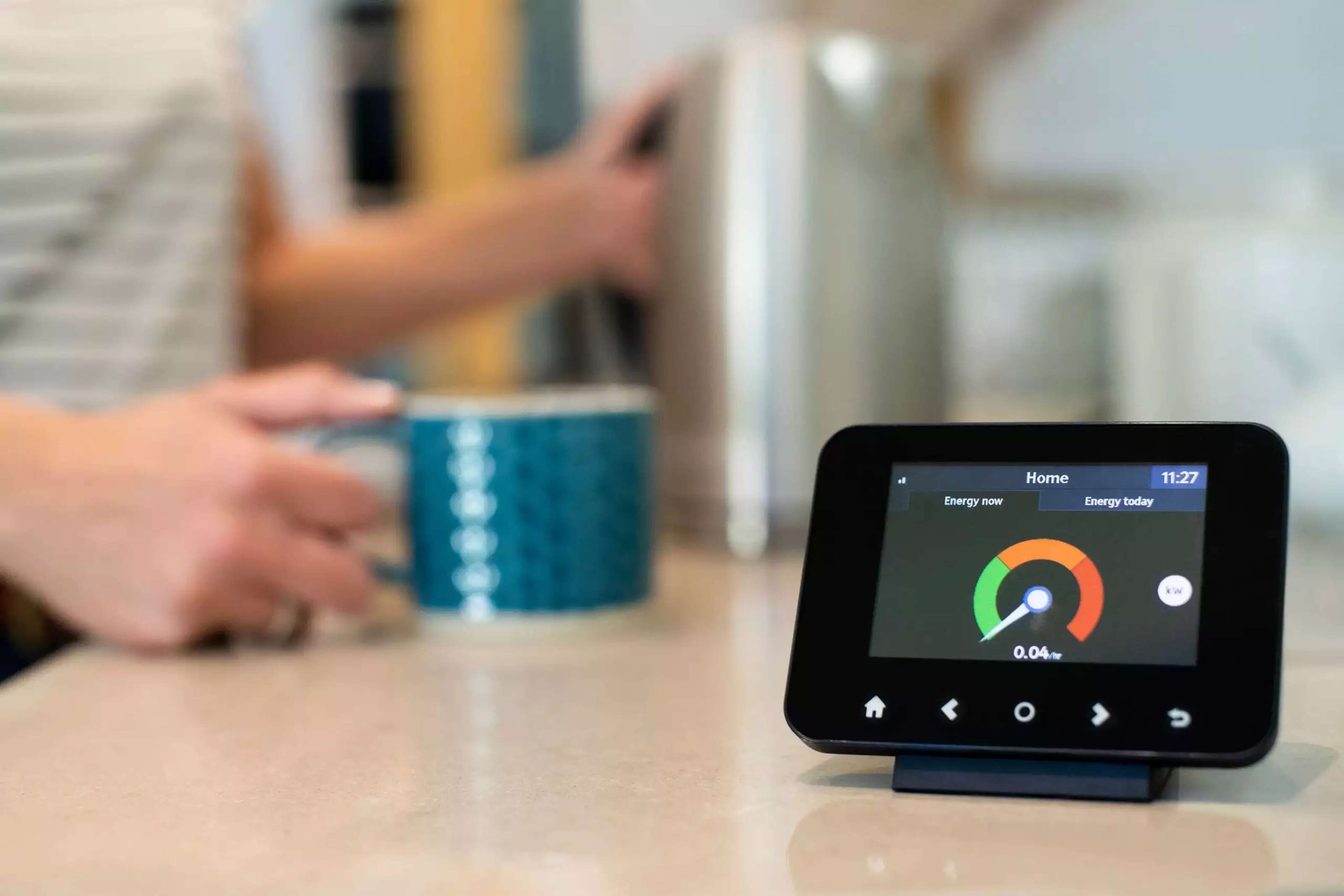
They can communicate with a portable in-home display to show real-time usage levels. Using a secure smart meter data network, they also send readings automatically to your energy supplier.
All energy suppliers must aim to install smart meters in every home in the UK, as part of a government plan to replace older energy meters. This includes prepayment meters. More information about the government’s rollout plan can be found here.
If you haven’t had a smart meter installed at your property yet, you can contact your energy supplier to request installing one. Your supplier will contact you to tell you when you can get one.
The Benefits of Installing a Smart Meter in Your Home
Are smart meters good for saving money? Are smart meters accurate?
Is it worth getting a smart meter?
Read on to learn about the benefits of a smart meter installation.
The UK needs to be able to adapt to embrace greener energy sources like wind and solar power, as well as changes in how we use energy, like charging electric vehicles. Smart meters are at the heart of our move towards a cleaner, more flexible energy system.
Half-hourly readings from smart meters open the door for suppliers to offer tariffs that may cut your charges. For example, if you use power when it is cheaper for them to buy it on the wholesale market or supply it to you. (Ofgem).
Using half-hourly data in this way will save an estimated £1.6 billion - £4.5 billion on consumers’ energy bills by 2045 (Ofgem). By 2035, the UK transition to smart meters could also reduce CO2 emissions by around 25% compared to 2015 levels (Smart Energy GB).
Should I get a smart meter?
As listed by Ofgem, the benefits of a smart meter include:
1. Near real-time information on your energy use
You can easily track your expenses and see when you could be more efficient with your energy usage.
2. An end to estimated bills
Because of the connection between your smart meter and supplier which shares data, smart meters can be used to calculate an exact energy bill, not an estimate based on previous months readings.
3. Access to a broader range of tariffs
Some of the tariffs available to those with a smart meter may be cheaper than the one you are currently on with a traditional meter.
Smart meters can work if you pre-pay for your energy or if you pay for it after you have used it.
If you are a prepayment customer, there are particular benefits of a smart meter:
- Energy suppliers may be able to offer new and more flexible ways to top up, without needing a trip to a shop.
- Your in-home display shows your credit balance, so you won’t run out without knowing.
- You can set your meter to top up automatically, so you won’t be caught without power if you run out of credit when shops are shut.
- You won’t need to change your meter if you switch between prepayment and credit tariffs (including direct debit tariffs).
Addressing Common Concerns: Accuracy, Costs, and Safety
There are two types of smart meters: first and second generation, SMETS1 and SMETS2 respectively. The type of meter you have mainly depends on when it was installed.
Any smart meters installed now will be second-generation meters, which typically avoid many of the issues.
Homes with first-generation smart meters are gradually being integrated into the smart meter data network. This means they will function more like second-generation meters, and most have already been connected.
Concerns About Costs
Will a smart meter work with my solar panels?
According to the government's Department for Energy, Security, and Net Zero, all smart meters can measure energy consumed and exported back to the grid (GOV.UK).
Tariffs that reward you for exporting solar electricity to the national grid under the Smart Export Guarantee require you to have a (usually smart) meter that can give half-hourly readings.
If you are offered a smart meter, be sure to inform your supplier so they can confirm compatibility with your solar setup.
Can my supplier switch my smart meter to prepayment?
Energy suppliers may install prepayment meters for customers in debt, and with smart meters, they can switch your meter to pay as you go mode remotely. However, pay-as-you-go for debt collection should only be a last resort.
Your energy supplier must check that prepayment is safe, practical, and accessible, and that you aren’t in a vulnerable position. Your smart meter can also be transferred back to credit mode remotely. Contact your energy supplier if you think it’s been unfairly switched to prepayment mode. You can also escalate the issue to the Energy Ombudsman if it becomes necessary.
Concerns About Accuracy
Are Smart Meters Accurate?
Smart meters are just as accurate as traditional meters. By law, all smart meters have to be approved by and certified by the Office of Product Safety & Standards to prove their accuracy. What's more because your smart meter comes with an in-home display and sends automatic meter readings to your supplier, any issues with your meter readings can be spotted sooner and may be able to be resolved remotely.
One in 10 people said that they had a problem with their bills being inaccurate in the past 12 months. If your old meter was faulty or you didn’t submit meter readings and got estimated bills, an energy company can charge you retrospectively for the previous year if you have underpaid. If you've overpaid, your supplier must refund you for the time period that the meter was faulty. (Which?).
According to an October 2023 Which? survey of 9,025 energy customers, 9% of reported problems were to do with smart meters not sending readings and 22% were to do with smart meters breaking or not working (Which?).
If you’re concerned that your bills are wrong, or your smart meter is showing an error message, contact your supplier.
Will my smart meter stop working if I switch energy supplier?
Some first-generation meters lost their smart functionality when switching suppliers. About 9% of home smart meters are operating in ‘traditional mode’, according to government data from August 2023, totalling over 2.7 million units (Which?).
First-generation smart meters are being moved onto the smart meter data network. Once they have been moved over to this network, these meters should regain their smart capabilities and retain them in the event of further supplier changes.
When you switch supplier with a first-generation smart meter it will continue to accurately record your energy usage as before. However, if the new supplier can’t run your meter in smart mode, you may need to temporarily take manual meter readings.
If you’re planning to switch, check with your new supplier whether your first-gen smart meter will stay smart.
Will poor mobile signal affect a smart meter?
Smart meters need to be able to connect to the secure smart meter data network operated by the Data Communications Company (DCC) via a wireless network. Second-generation smart meters, currently being installed, have their own separate secure network that doesn’t rely on mobile phone networks.
By the rollout's end, 99.25% of Great Britain will be covered by this network, but the remaining 0.75% may not be able to have a smart meter that connects to the full network. First-generation meters relied on mobile networks. Challenges in areas with poor signal will improve once your meter is connected to the smart meter network (Which?).
Concerns About Safety
Are smart meters safe?
When properly installed by licensed professionals, smart meters are just as safe as traditional meters.
A 2017 study on smart meters in Great Britain found that smart meters emit fewer radio waves than mobile phones and Wi-Fi equipment. It also found that their radio wave exposure is below guidelines set by the International Commission on Non-Ionising Radiation Protection (Which?).
You can read more about smart meter safety here.
How is my data used?
It can only be used for specific regulated purposes like billing. Only if you give your consent can suppliers and third parties use your data to offer new products and services, such as tariff advice.
Is It Compulsory to Have a Smart Meter Installed?
No, you do not have to have one installed in your home, and you can choose not to accept an offer to have a smart meter fitted. You can also request to have one at a later date.
However, choosing not to have one might mean you have a limited choice of energy tariffs. Some smart tariffs may be cheaper.
There are also a few situations where your supplier will need to install a smart meter, unless there is a good reason not to:
- If they are replacing a meter.
- If they are installing a meter for the first time, in a new property for example.
If you pay for the gas or electricity in your rented property, you can choose to have a smart meter installed. However, you should check with your landlord before you get one, as there may be rules in your tenancy agreement about how energy is supplied to the property and the type of meter that can be installed. If your tenancy agreement says you need your landlord’s permission to alter metering at your property, they shouldn’t unreasonably prevent it.
If your landlord pays the energy bills, the decision is up to them.
If you have any concerns about a smart meter, you can discuss these with your energy supplier. They will be able to answer any questions you may have.
How to Get a Smart Meter: A Step-by-Step Guide
If your energy supplier has not already approached you about installing a smart meter, you will need to get in touch with them to check your eligibility.
If you are eligible, your supplier will arrange a date and time for a licensed professional to carry out the installation.
Your smart meter installer must follow a code of practice. This includes:
- Offering you an in-home display (IHD) that shows you your energy usage in pounds and pence.
- Showing you how to work any equipment they fit.
- Providing energy efficiency guidance.
You can learn more about the fitting process and the code of practice on the Smart Energy GB website.
Once installed, you will be able to see both your historical and real-time data on your IHD. Your smart meter will store data about your energy use every 30 minutes. You can decide how often automatic meter readings get sent.
Find out more about smart meter installation here.
Maximising Your Smart Meter: Tips and Tricks for Savings
Are smart meters good for saving money?
Here are some tips and tricks:
- Set a budget on your in-home display
This could be a daily, weekly, or monthly target, done through the settings on your smart meter. You decide the amount. It won’t cut your power if you go over budget, but it helps you keep tabs on spending and motivates you to use less energy.
- Learn your energy habits
Watch your in-home display and monitor which times of day, or days of the week, you use the most energy. This will help you to figure out which activities are the most energy intensive.
- Combine your smart meter with solar panels
If you have solar panels, you will probably need to get a smart meter to receive Smart Export Guarantee payments for the electricity you export to the grid. Using your in-home display, you can keep track of whether you’re using your own solar power or paying for energy. It helps you to learn how to schedule your power use to save money and make the most of your solar panels.
- Take part in the demand flexibility service
If your smart meter sends readings every half hour, you may be eligible to take part in the National Grid’s Demand Flexibility Service events through your energy company. These programs pay you to use less energy during peak times, with payments based on how much you reduce usage. It can save you money, while helping the environment, by reducing the need for polluting coal generators to be used by the grid.
So, is it worth getting a smart meter?
Although the benefits of smart meters include making it easier to manage your energy bills and save money, there are no guarantees it will reduce your bill. It’s up to individuals to make changes to their energy use habits based on the information provided by the smart meter to lower their energy consumption or use energy at a cheaper time.
Here are some more tips for saving money on your energy bills. You can find more information on energy meters on our meters information page.
You can also read more about how smart meters can save you money on the Money Saving Expert website.
Overall, smart meters are a valuable tool to consider, however, it's crucial to note that even smart meters are tampered with by energy thieves.
Energy theft is dangerous. It puts you and your loved ones in serious danger. If you suspect meter tampering, whether in your home, or by someone you know who lives elsewhere, tell us what you know, immediately, to Stay Energy Safe. You will remain 100% anonymous. Always. We won’t ask who you are, we’ll just pass on the details that you provide to those who can make sure the meter you are concerned about is safe.